The very real story of Mona Die Die Die at Burning Man
When we named the piece Mona Die Die Die ten months ago, we didn’t plan what would follow—but it ended up dying three times.
Something about the artwork Mona Die Die tugged at me since rumours of it's circumstances surfaced from Burning Man 2025.
Other artworks also saw untimely and awkwardly early ends, like the anticipated Black Cloud. Many camps were brought down and challenged by the insane weather conditions during the immediate days before the event. Basically everyone out there in the desert building anything needed to revert to their plan B's and C's. Still, something about this specific artwork's story compelled me to find out more.
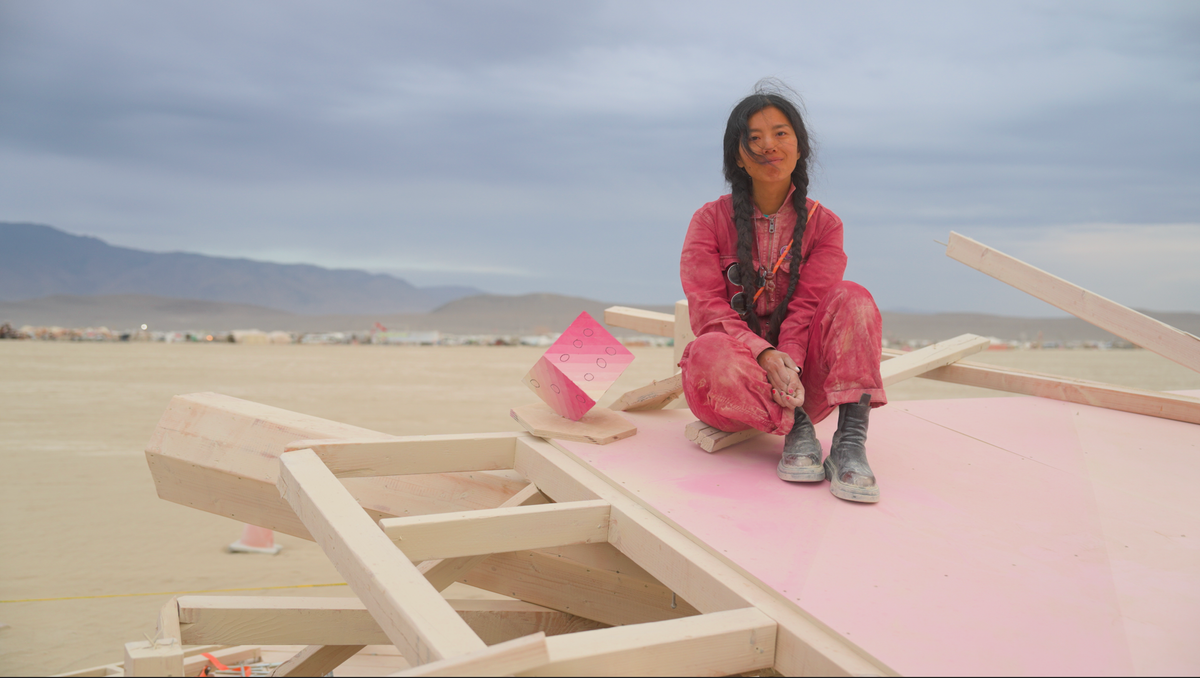
I reached out to He Miao asking if I can write about her and her crew's journey and what followed was a very real Q&A that I've decided to leave completely unfiltered as the artist came with incredible openness and honesty and each part describes so beautifully the journey of building ephemeral and short-lived artworks to burn, in the most challenging conditions, with sometimes timely and sometimes untimely ends.
Q: What inspired you to create art for Burning Man?
A: It all started in 2019 when I first attended Burning Man. At that time, I was struggling with severe bipolar depression and was on the verge of suicide, having lost all interest in life. After accidentally learning about Burning Man, I decided to visit this so-called utopia. There, I experienced incredible warmth, love, and unconditional support. As an artist who had just transitioned back from being a homemaker, seeing those large-scale installations in the desert was deeply motivating and filled me with hope. I made a vow to myself: one day, I would bring my own artwork back to share with everyone. That was the original motivation—I wanted to give back the warmth and love I had received.
Q: What happened with your build this year, and how far did it progress before the storm?
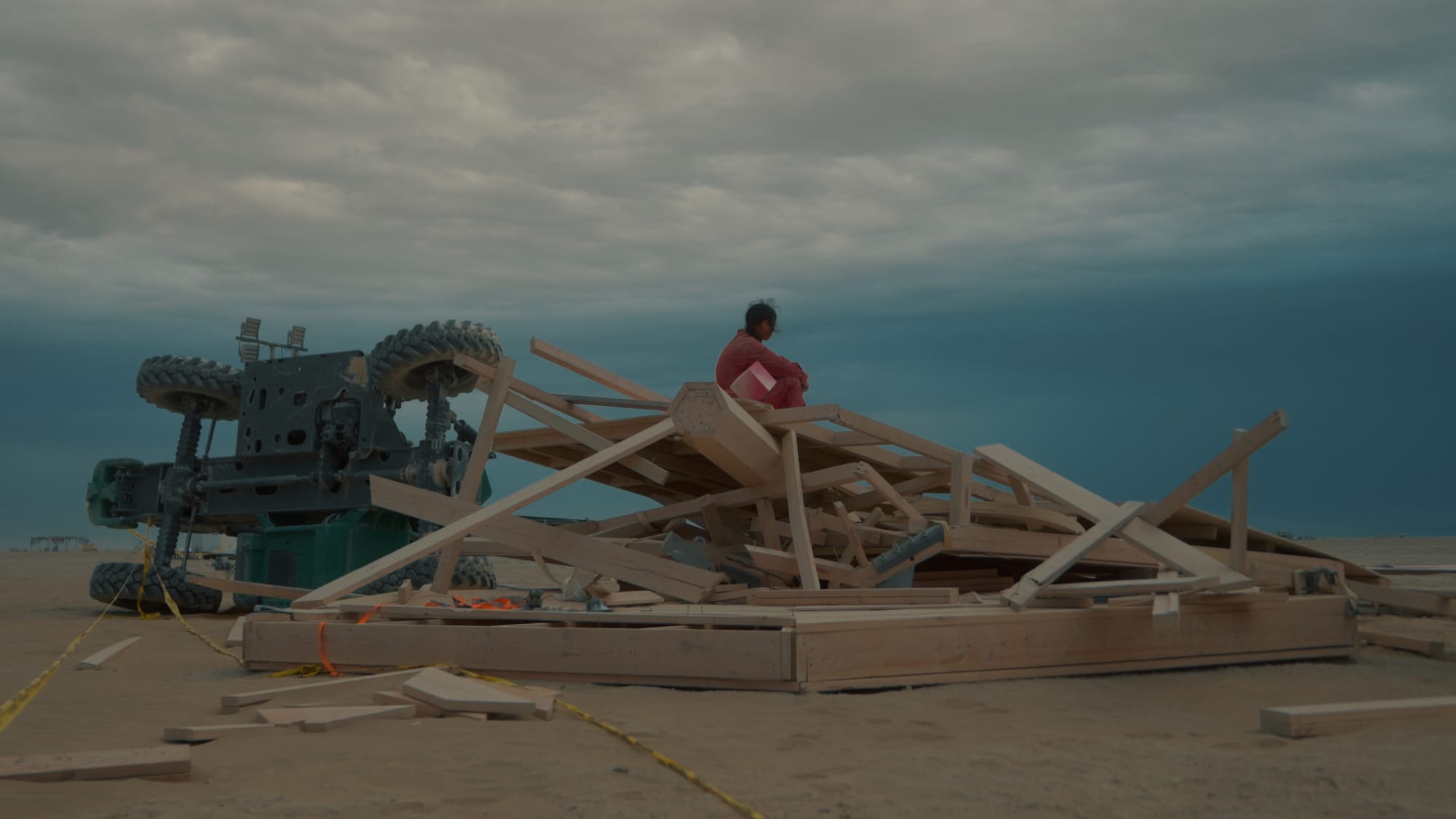
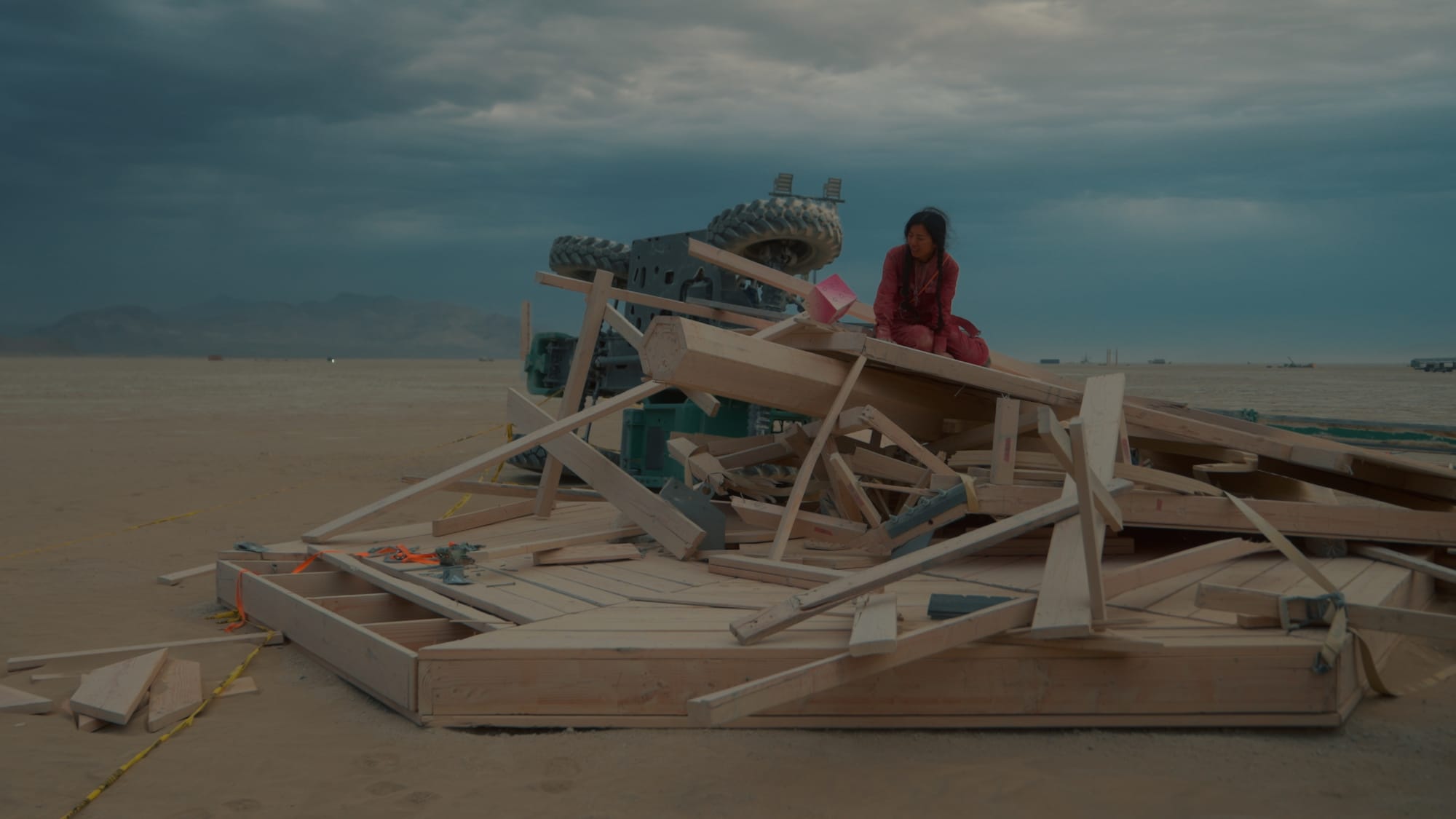
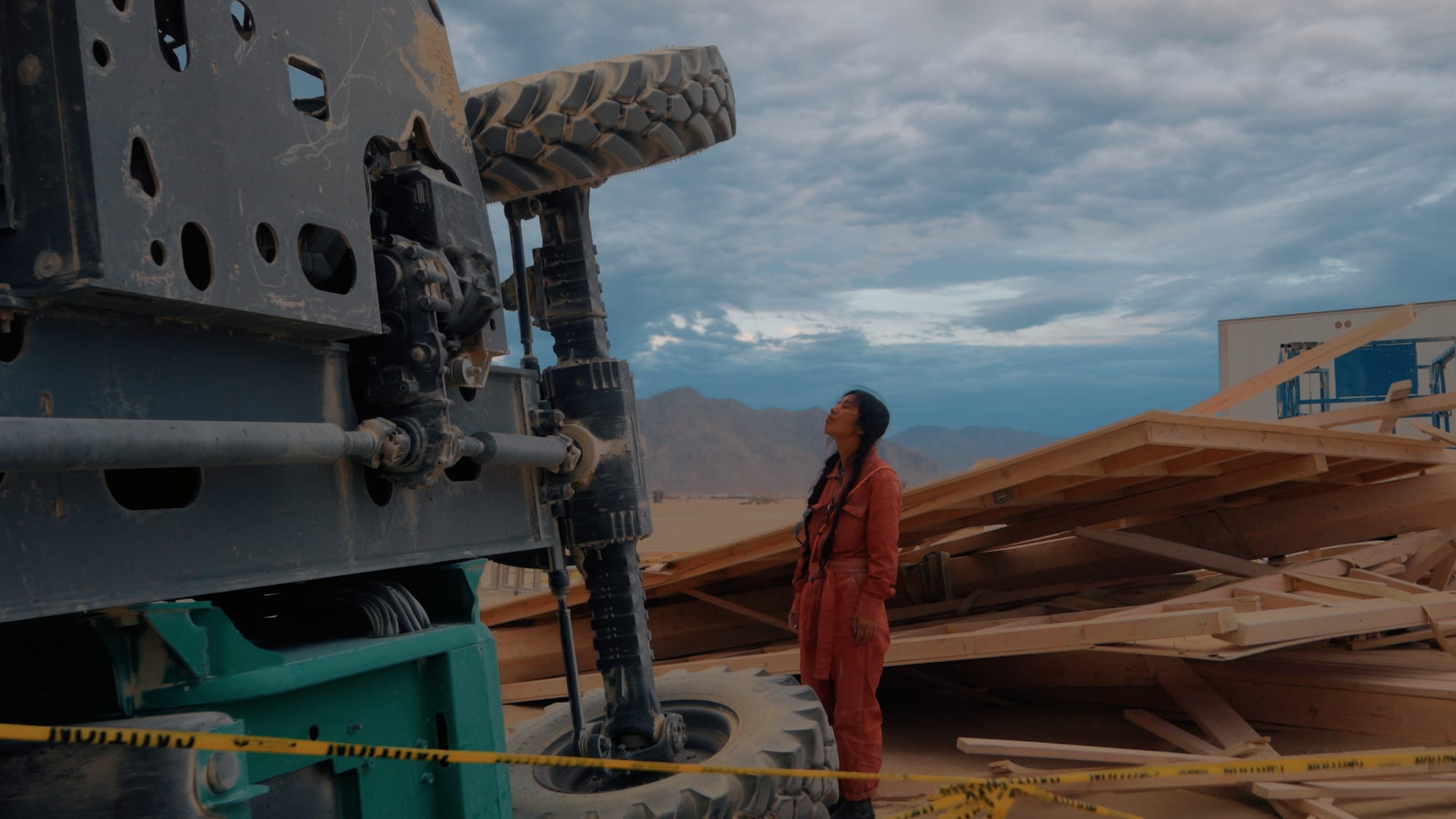
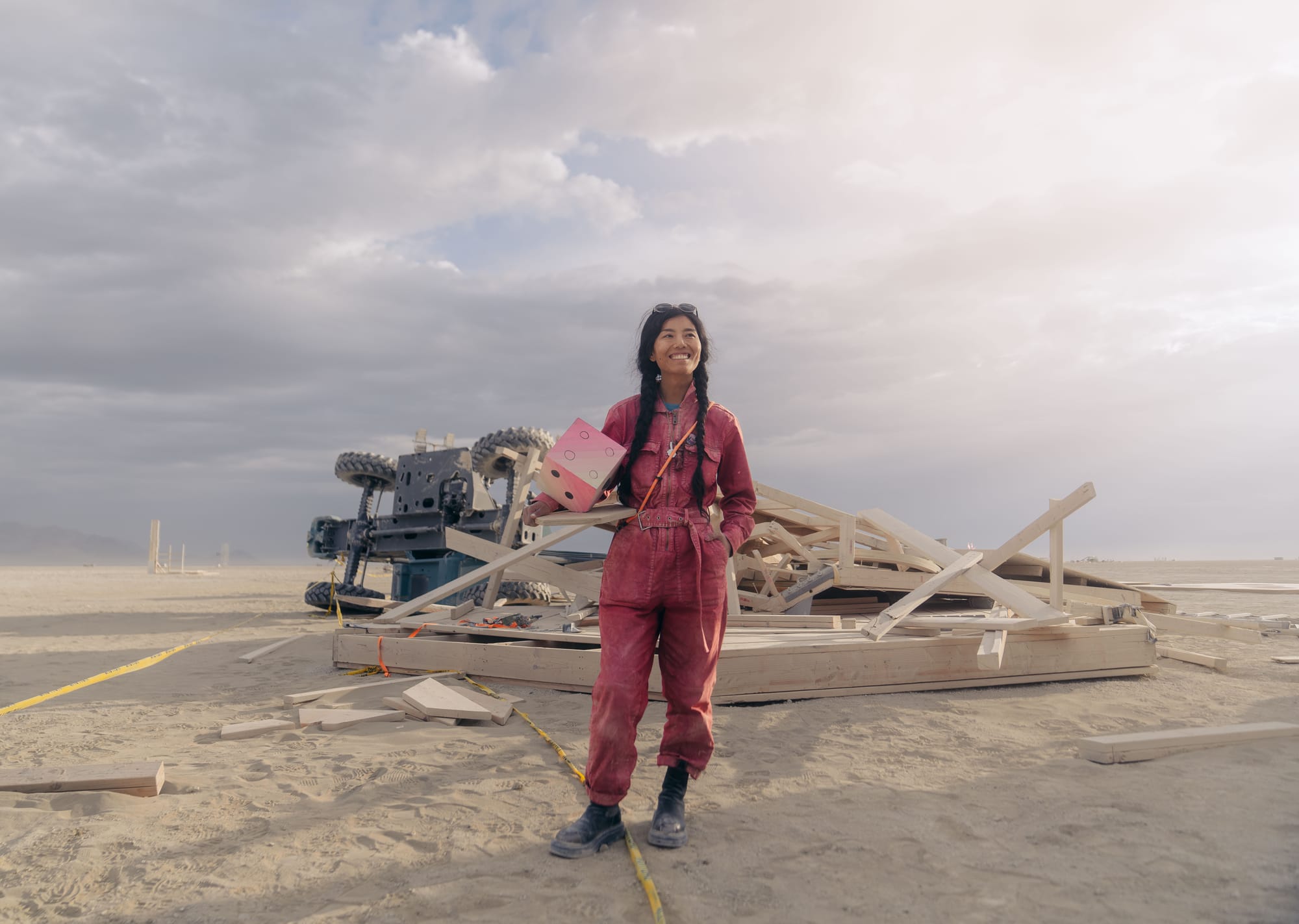
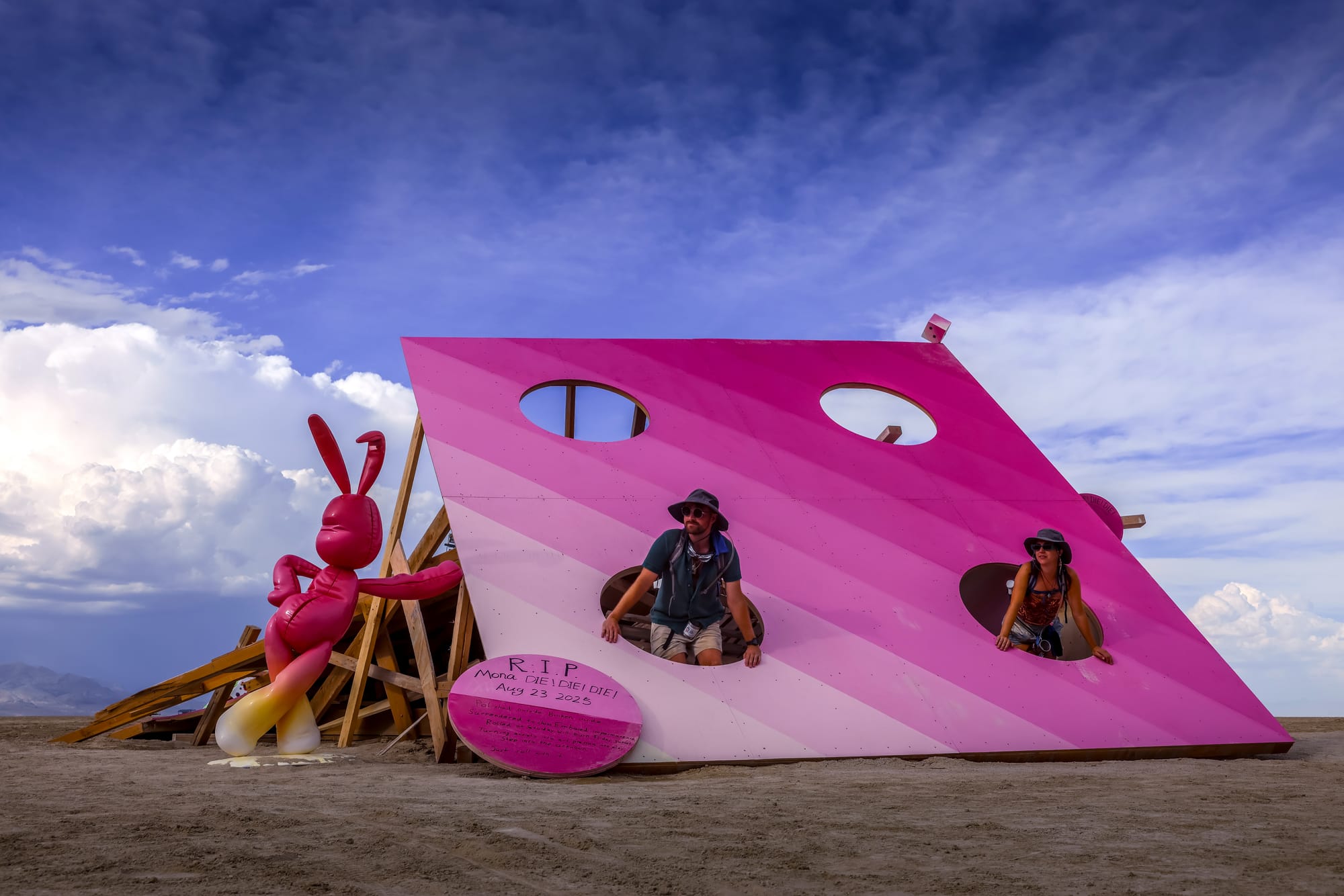
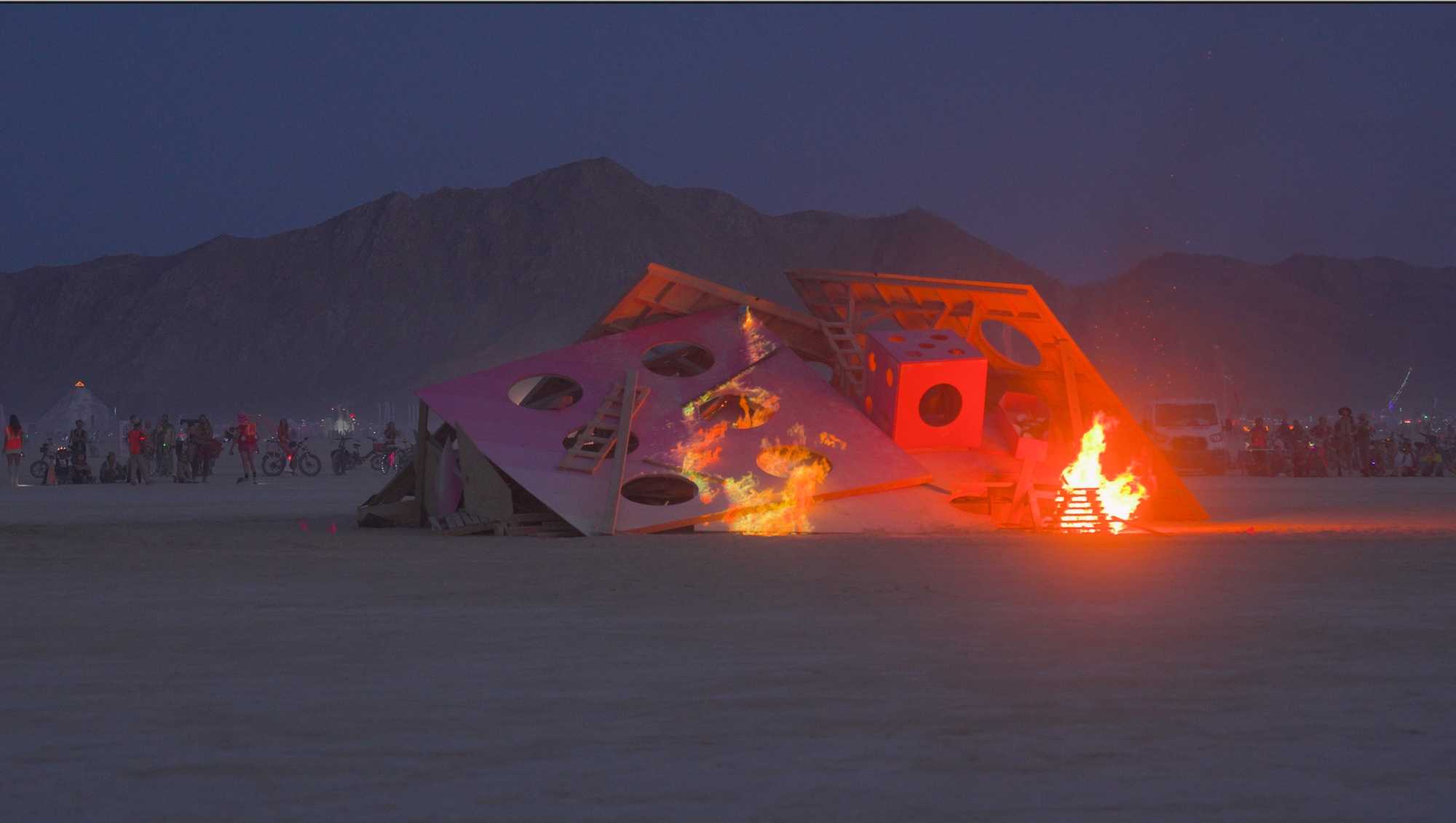
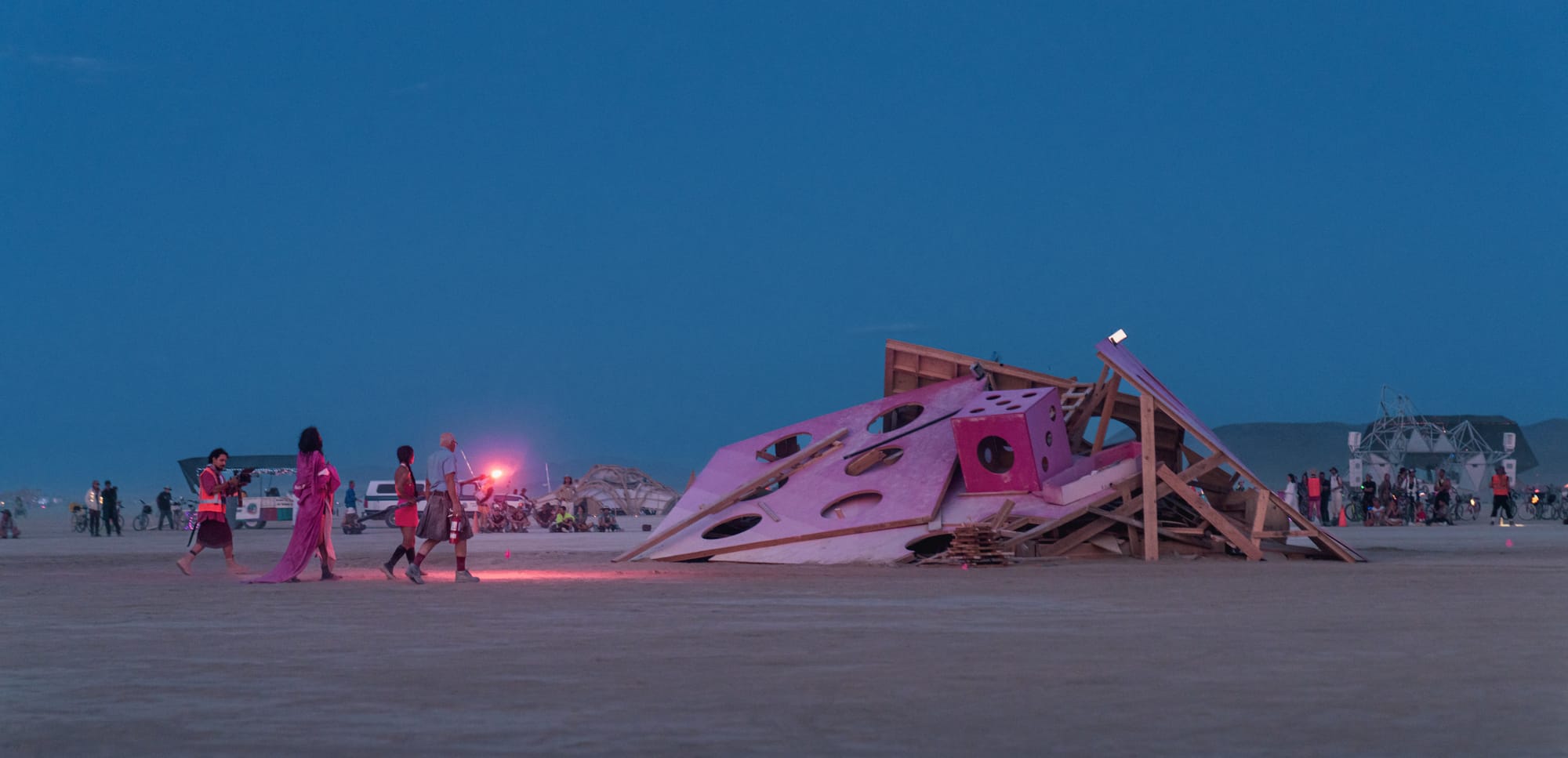
A: This year, my artwork Mona Die Die Die was struck by a severe dust storm on August 23. We were in the final stages of installation—the main structure and base of the large dice were fully assembled, and we had already mounted three of its six sides. But the storm hit suddenly. We didn’t have enough time to separate the dice from the forklift, and the entire piece was uprooted and destroyed.
Q: How does the artwork’s destruction by the storm compare to it being burned?
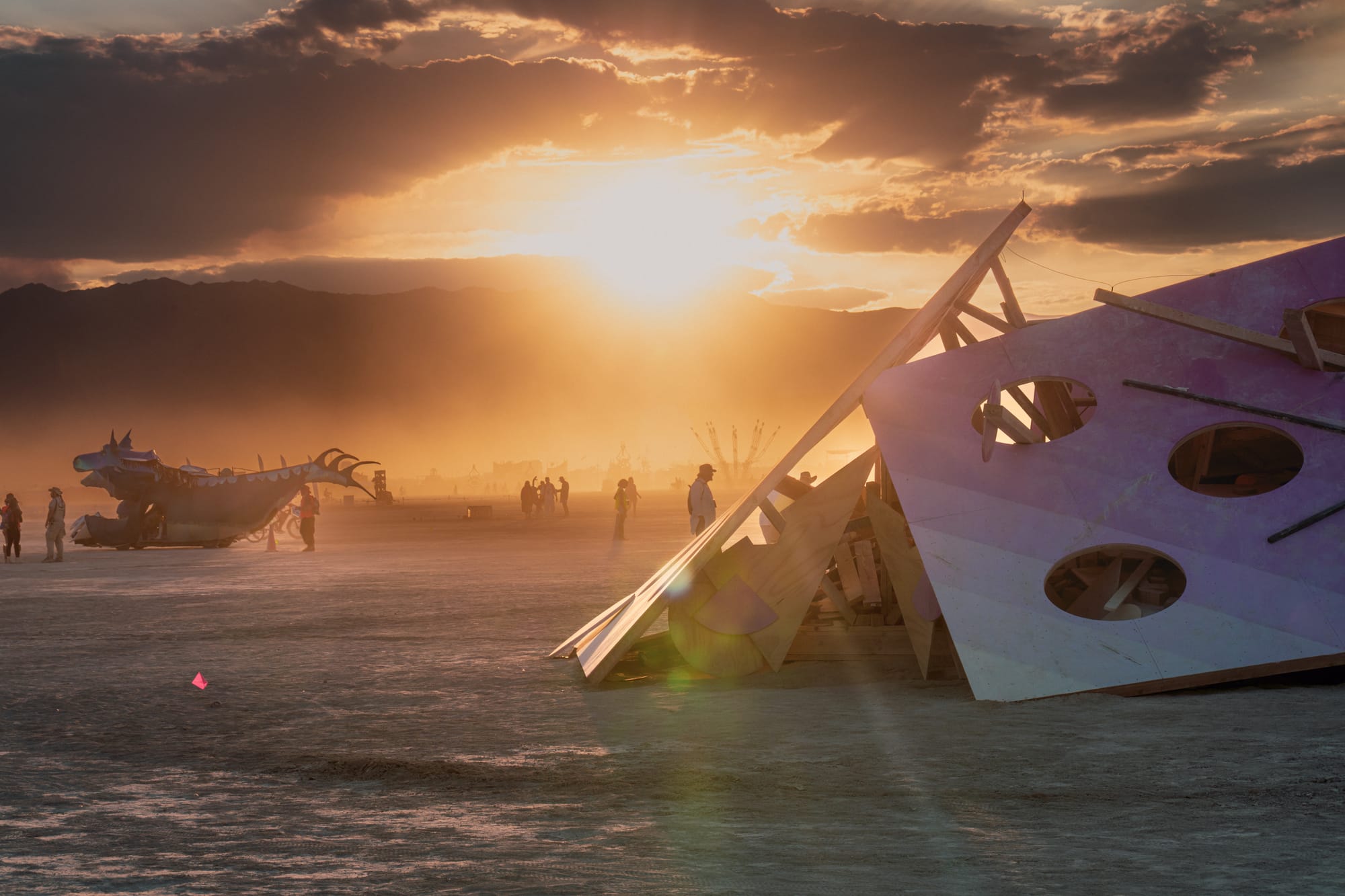
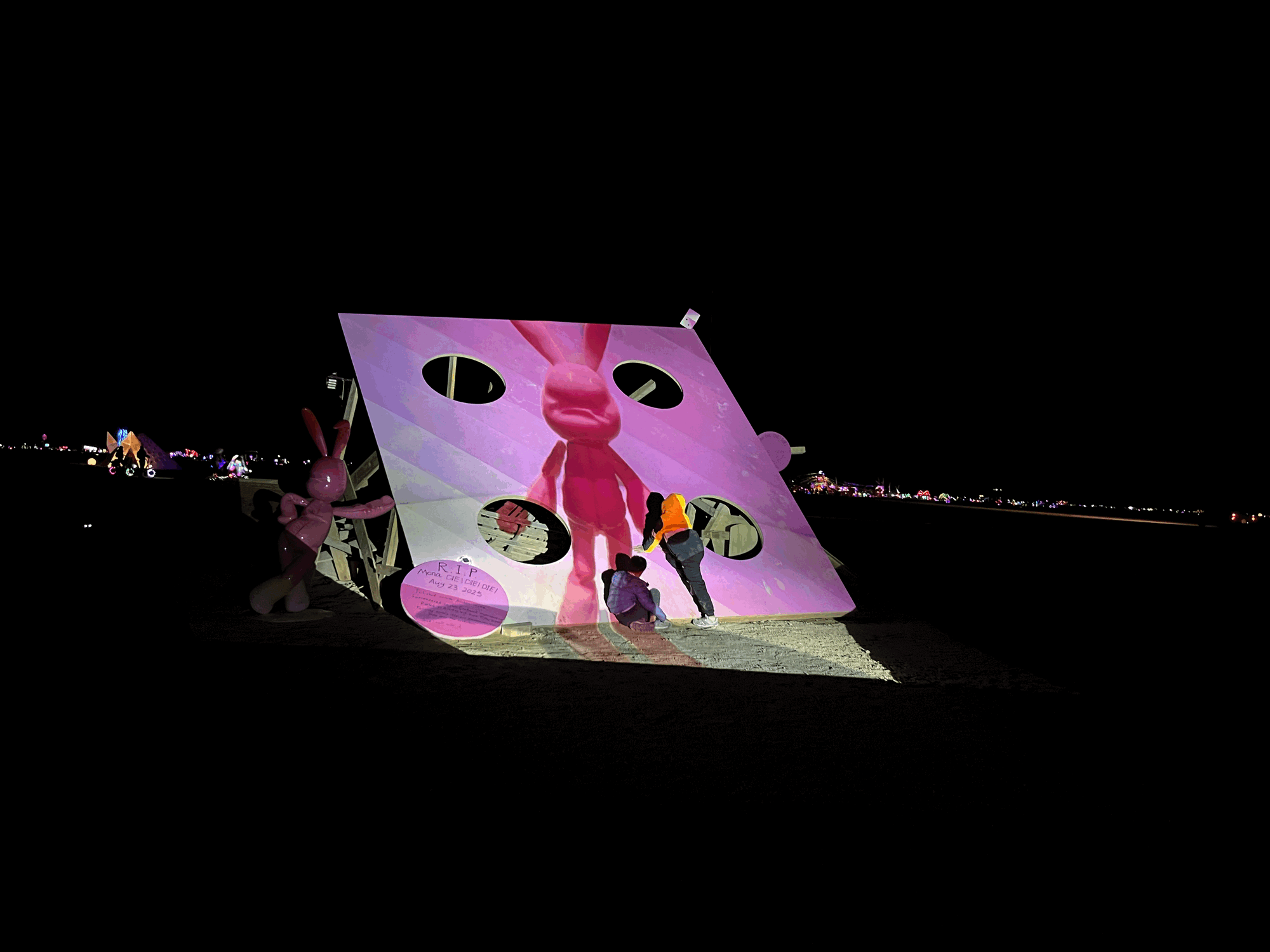
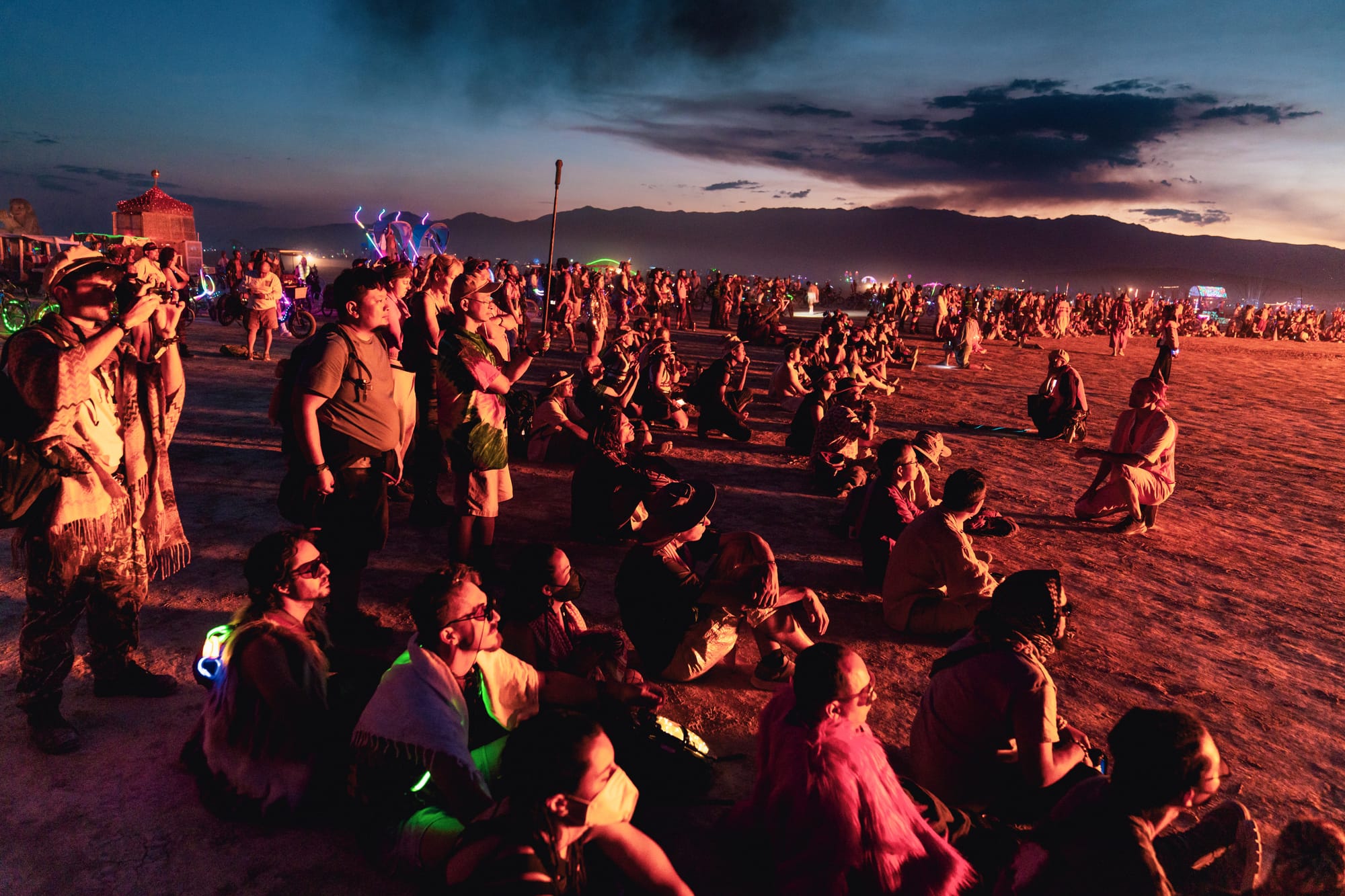
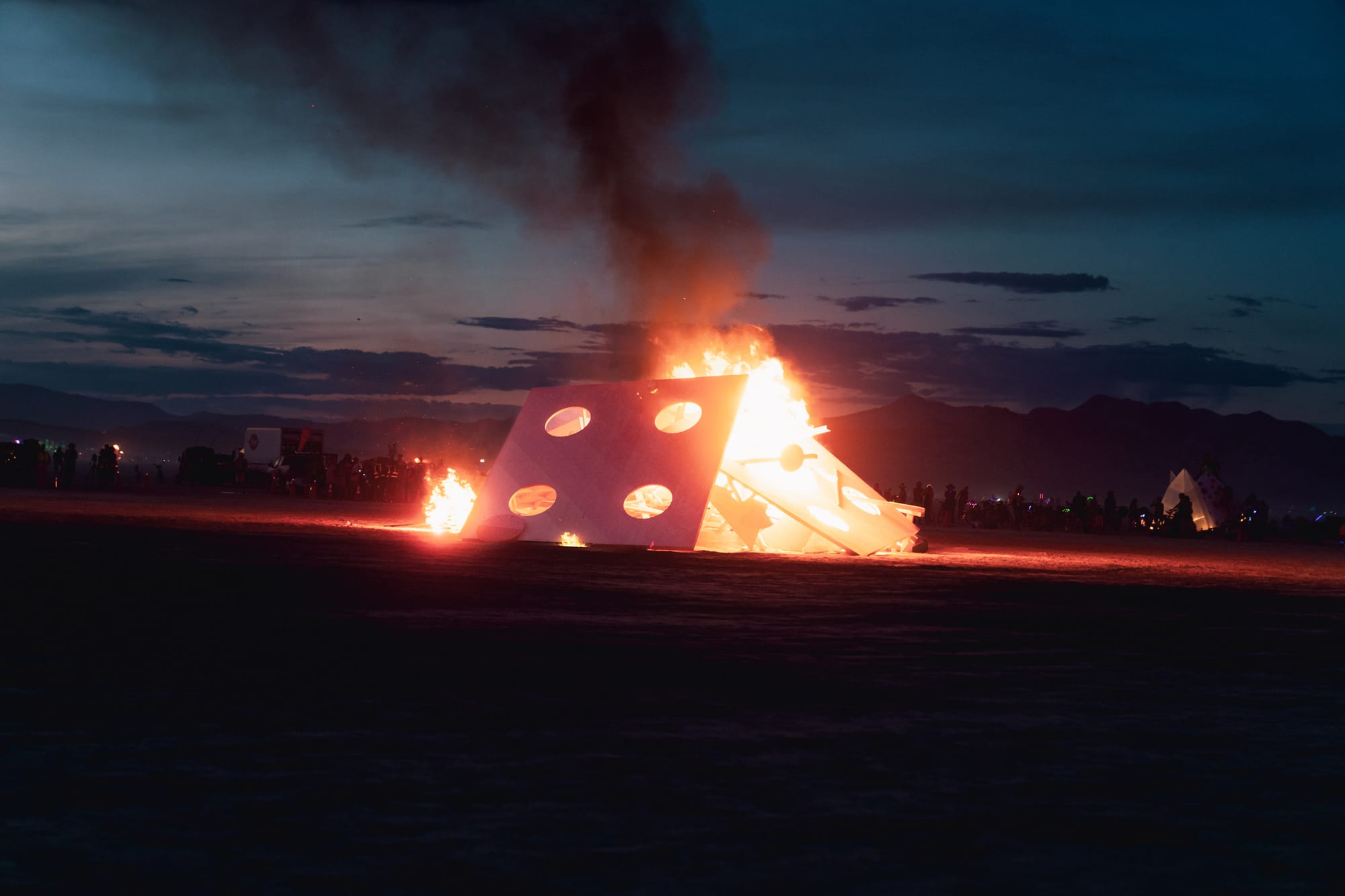
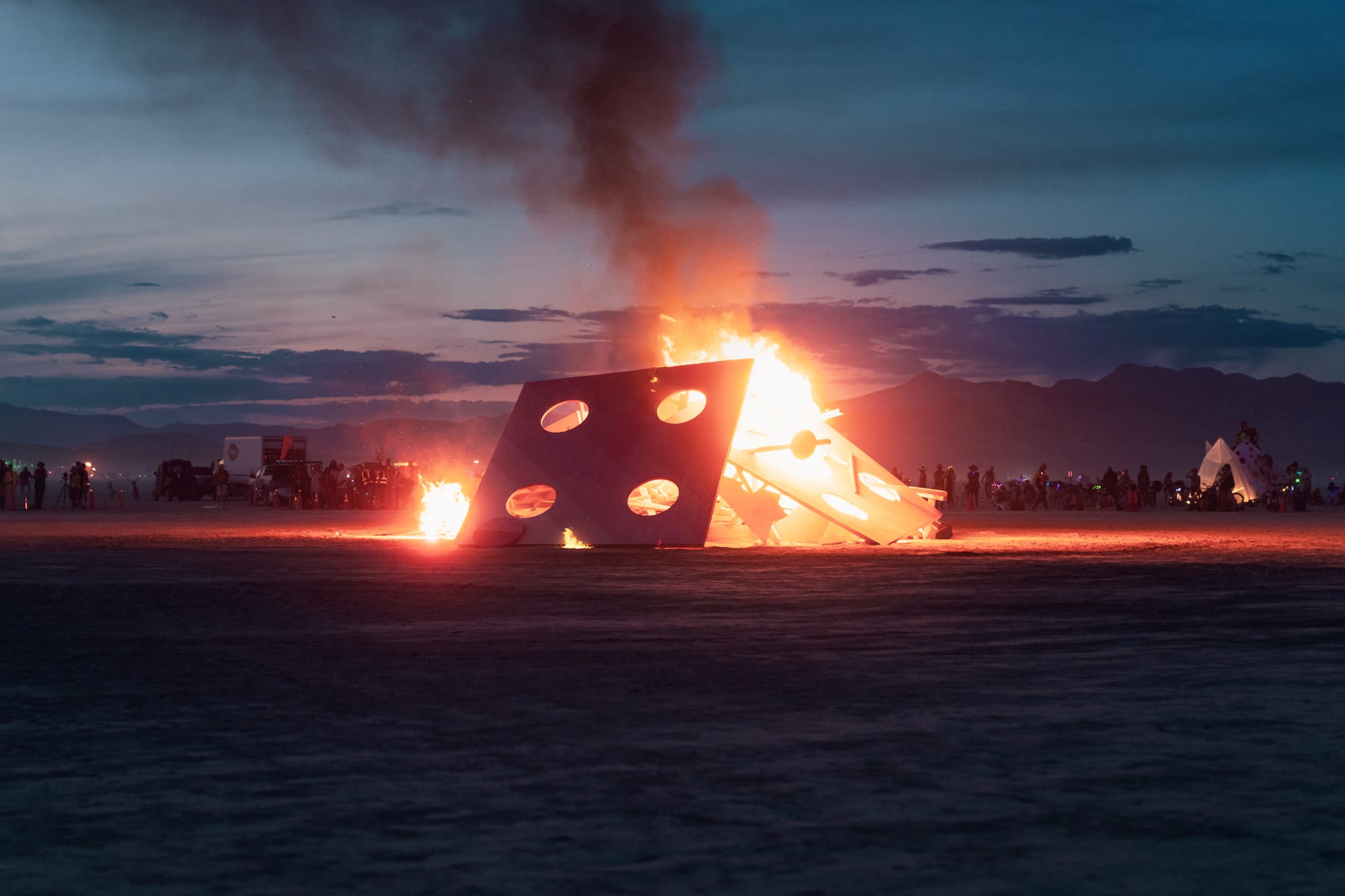
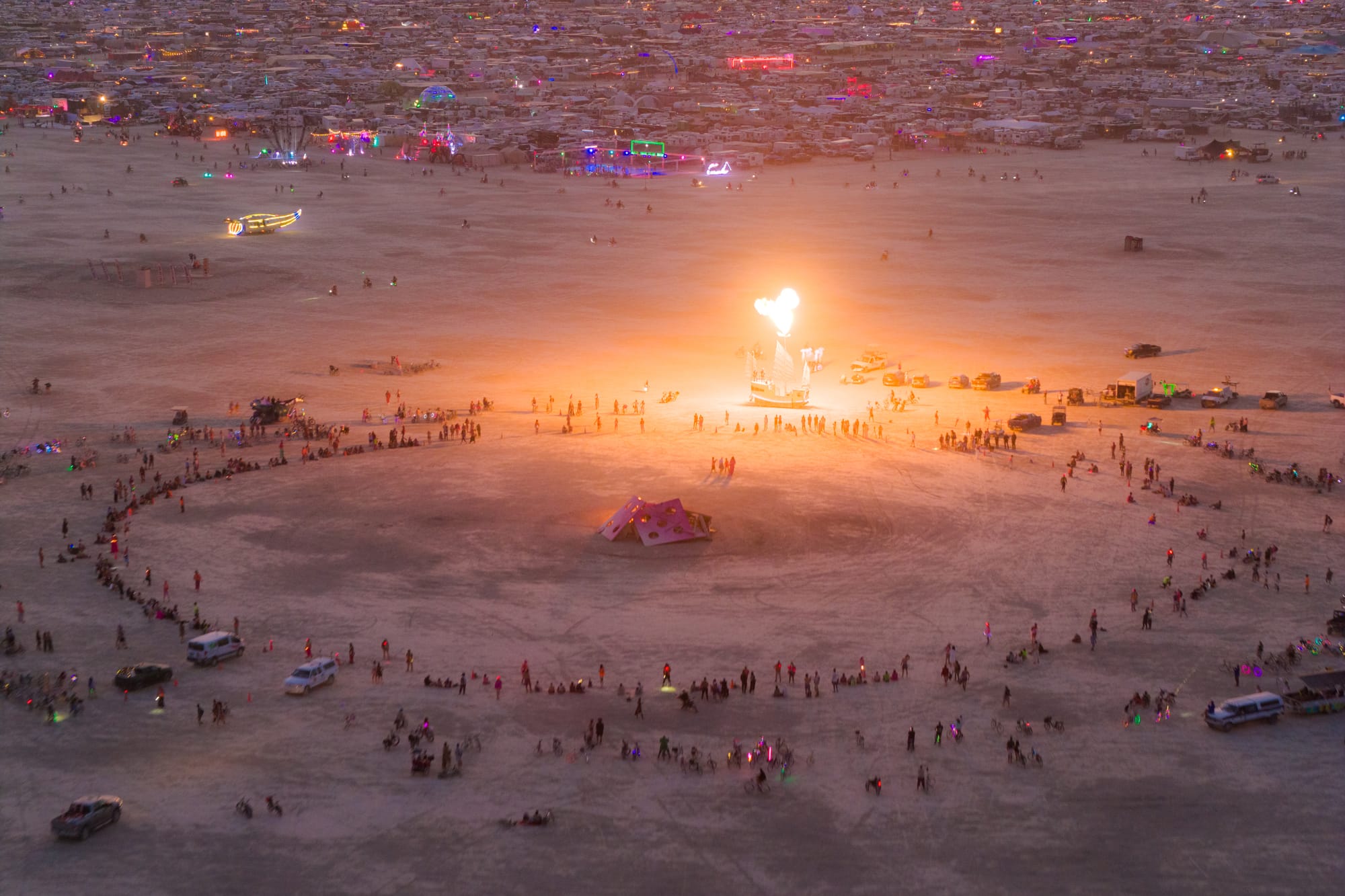
A: It felt like different paths leading to the same end. When we named the piece Mona Die Die Die ten months ago, we didn’t plan what would follow—but it ended up dying three times. First, it was destroyed by the storm before completion. Second, it disappeared physically in the planned burn. Third, it will fade from memory over time. The storm added an unexpected twist. Nature chose its own moment, which resonated deeply with the piece’s themes of uncertainty and impermanence.
Q: How did you come to terms with and reconcile this outcome?
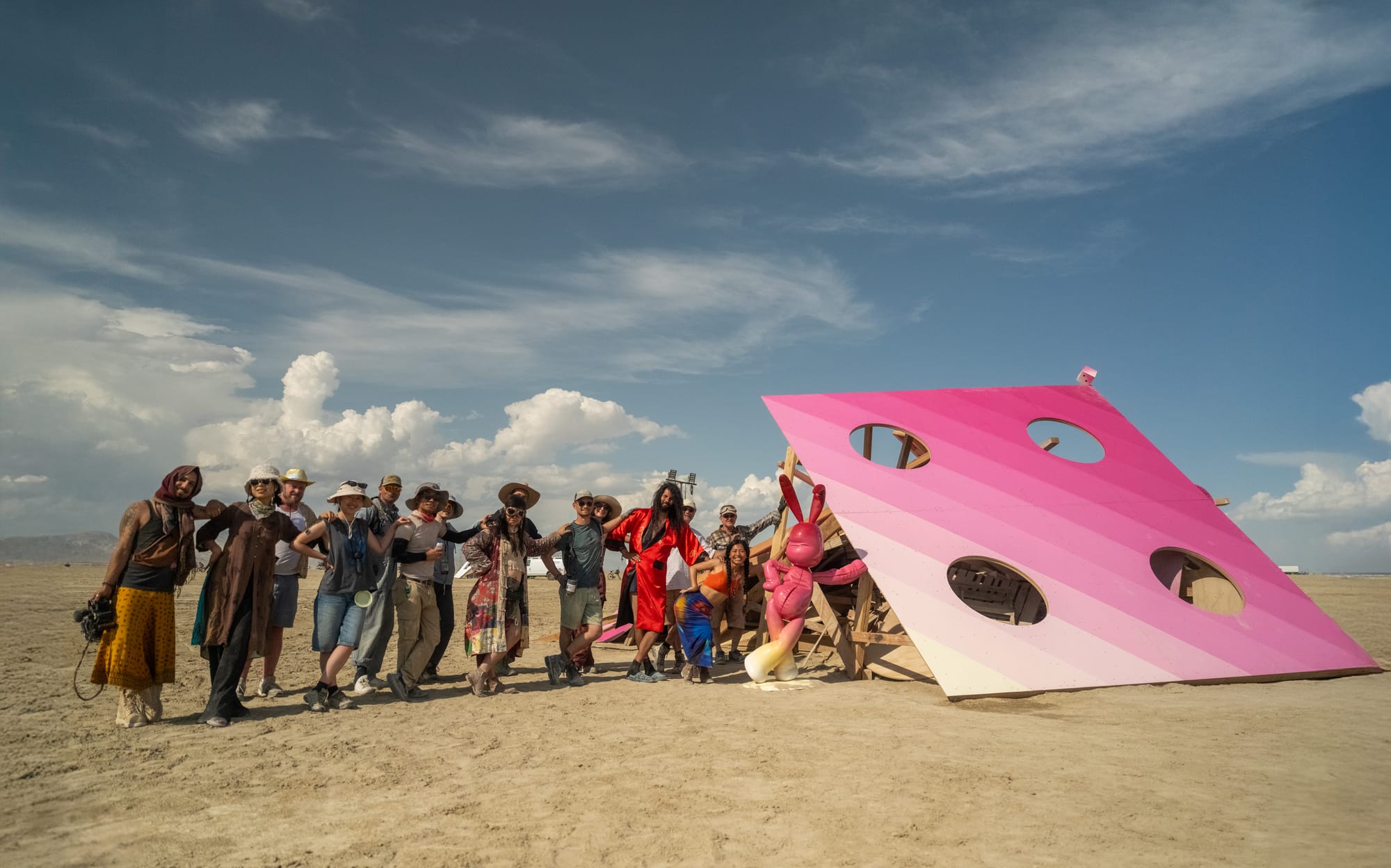
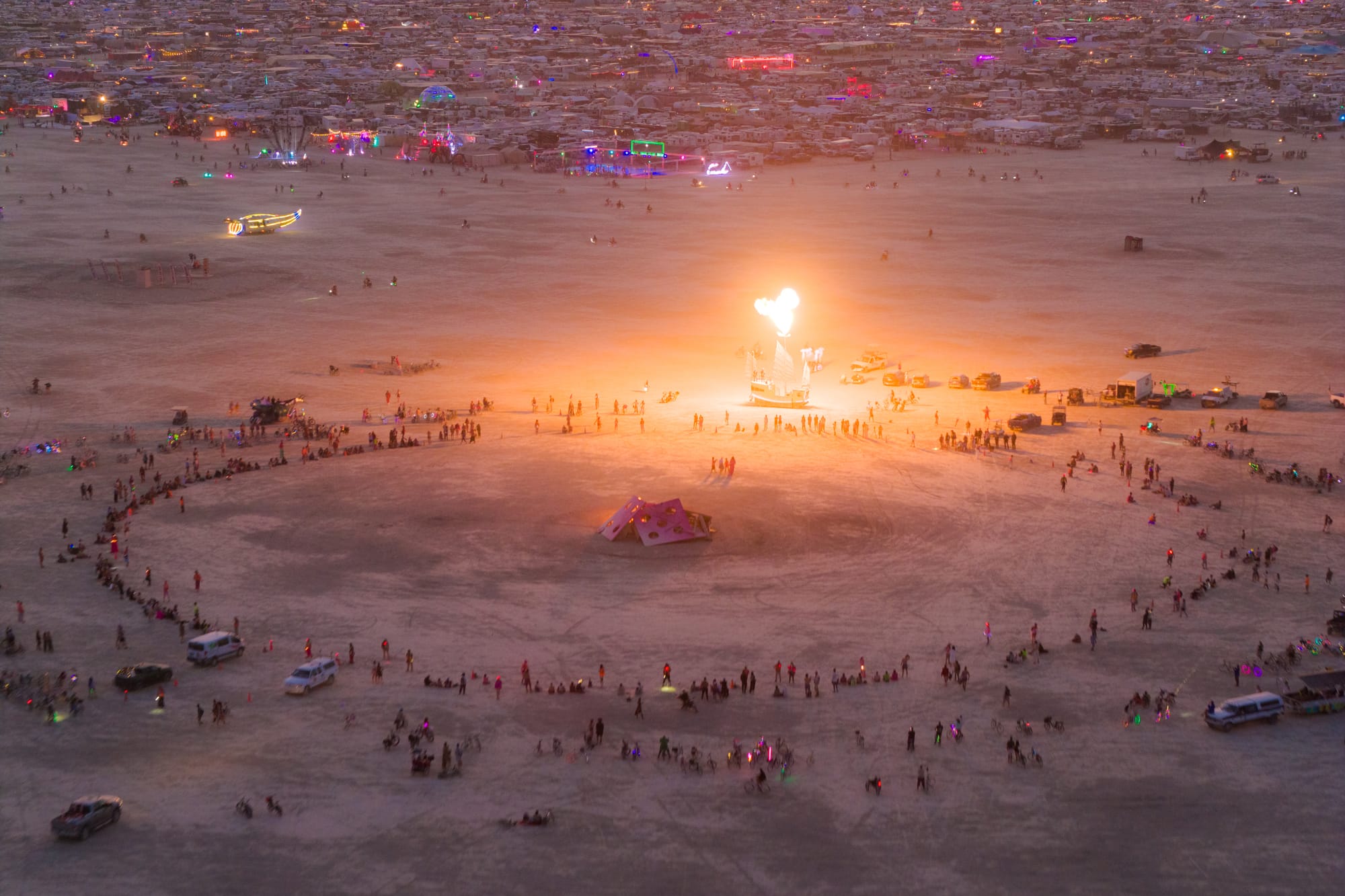
A: We accepted it openly because this year’s theme was all about embracing chaos and impermanence. The early destruction of the sculpture became a powerful expression of life’s unpredictability. We responded quickly by turning the wreckage into a “ruins playground,” allowing people to walk through the remains and reflect on the life cycle of art. It was also a tribute to all the art teams who face extreme conditions and setbacks in the desert. We didn’t surrender to chaos—we accepted it, adapted, and embraced it.
Q: How did this artwork and the journey impact you?
A: I spent a whole year fundraising, organizing teams, and working with volunteers, so the destruction was initially devastating. But it taught me a profound lesson: just as we keep living fully despite knowing life ends, we create art even though it will eventually disappear. The value is in the process, not the outcome. This attitude is, in itself, an artistic statement.
Q: How did the interpretation of the artwork change for you or others?
A: Many people asked afterward, “Was this intentional?” I could only smile wryly and say, “We did half, nature did the other half.” The fact that the piece was incomplete made its message even stronger—it became a real demonstration of impermanence and chaos, which was what Mona Die Die Die was all about.
Q: What made this Burn special for you, given your artwork’s journey?
A: This was my fifth Burn and the fourth time bringing an artwork. I’ve always been searching for answers at Burning Man, and this year, in the midst of loss, I found one: the power of family. At Mona Camp, we built a home in the desert. My father, my sister, her husband and daughter, my two sons, my boyfriend—my actual family was there. And beyond that, volunteers from all over the world came together. This diverse group supported each other like family. When the artwork was destroyed, no one complained or blamed. Instead, everyone said, “We’ll do better next time.” That spirit carried us through all difficulties. It made me realize that meaning isn’t in the destination—it’s in the journey. Art isn’t about the final product—it’s about the statement we make by creating.
Q: Is there anything else you’d like to share about yourself or your artistic vision?
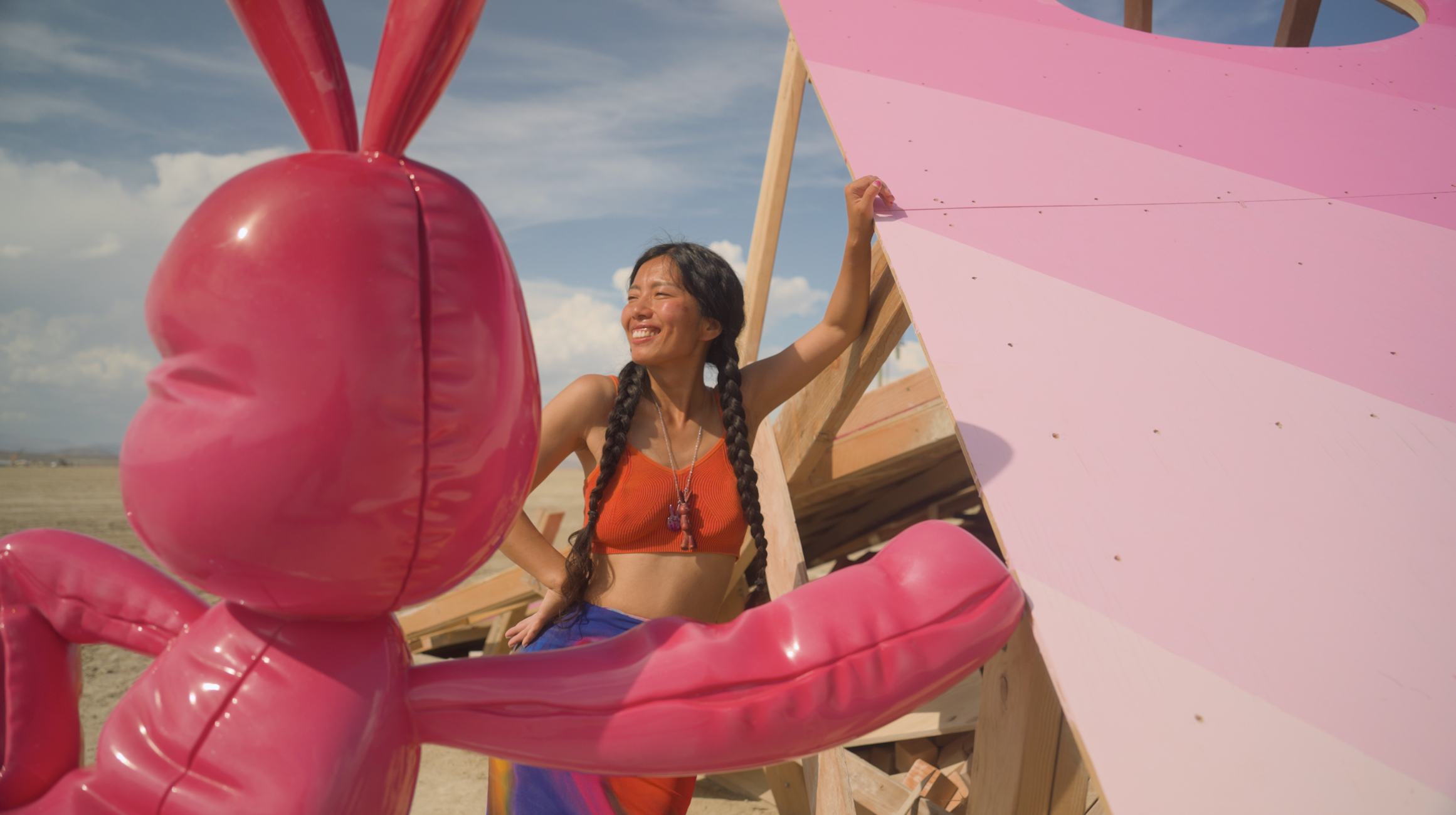
A: I’ve always been drawn to challenges. I started with painting, moved to metal sculptures, then large-scale installations. I moved to the U.S. with barely 100 words of English and built international teams. Pushing beyond my comfort zone is where I find creativity. “Mona” isn’t my real name—I’m He Miao—it’s a symbol: “Never give up, and always strive for beauty and excellence.” From Mona Bunny (2023) to Mona Mushroom (2024) to this year’s Mona Die Die Die, each piece embodies that spirit.
In conclusion, she stated so beautifully:
This artwork was half ours, half fate’s. We prepared the funeral—heaven chose the moment. In the face of the unpredictable, we still smile—because every ending is also a rebirth.
I would like to thank He Miao, the artist, for sharing this incredible story of the Mona Die Die art at Burning Man with me.